
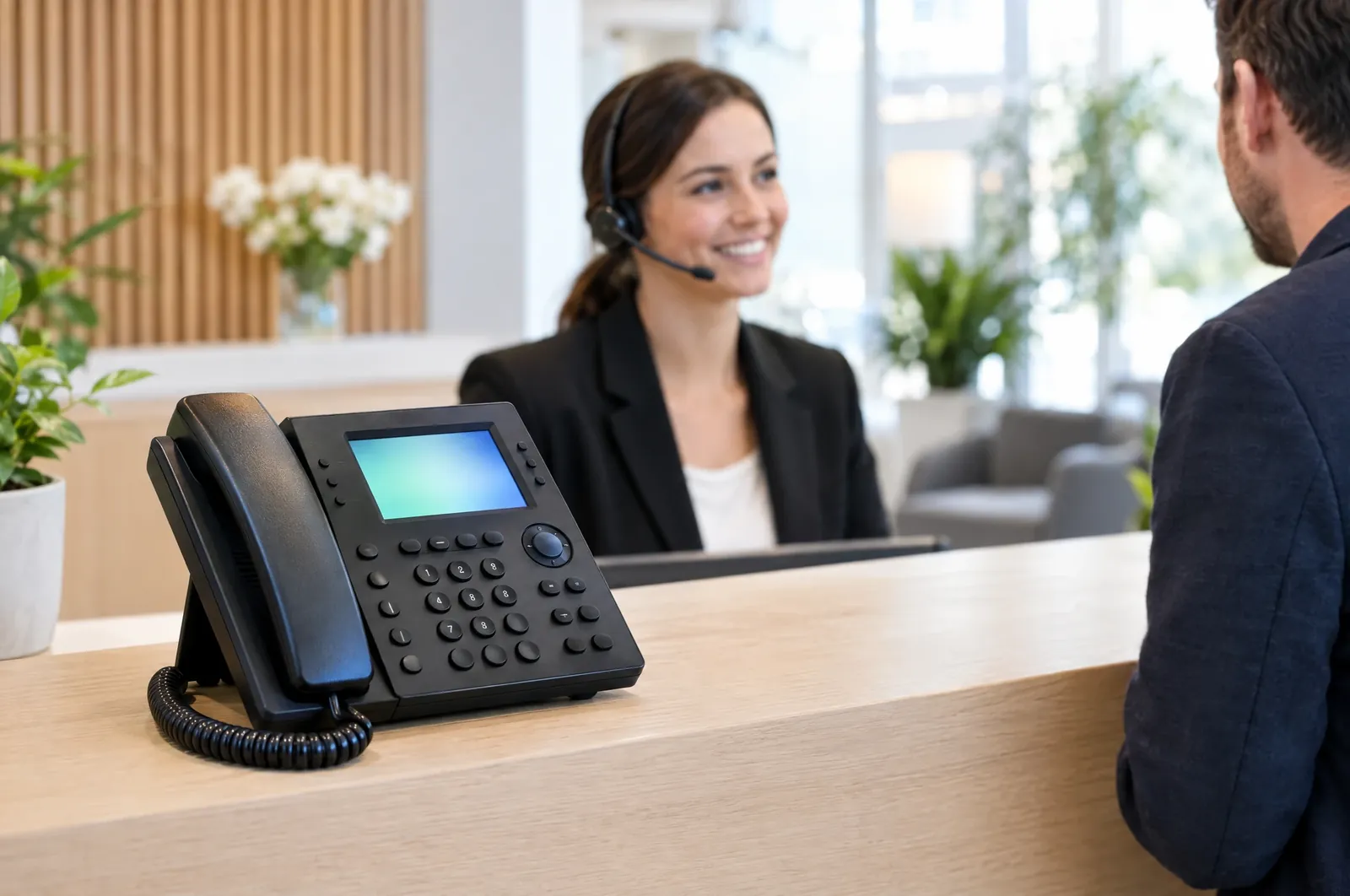
The holiday season is when the phones at a small business ring the most, and scammers know it. Over the past several weeks, federal agencies and security researchers have described two kinds of calls that land on ordinary business lines: callers pretending to be from the Federal Trade Commission who threaten to shut off a phone number, and robocalls claiming your business is missing from Google or voice assistants unless you pay to fix it.
Neither call needs any hacking skill. They work because a busy person answers, hears a confident voice and an urgent problem, and tries to help. The fix is mostly about people and habits, with a few phone system settings that make the job easier.
The fake "FTC" call that threatens your phone number
On October 22, 2026, the FTC published a warning about callers posing as its staff. The script goes roughly like this:
- The caller says a phone number registered in your name is being used for scams in another country, and reads out a fake badge number to sound official.
- If you don't cooperate, they threaten to deactivate the number.
- They transfer you to someone posing as a police officer to "file a report." If you hesitate, they may tell you to look up a police number and call it yourself, but the people who answer are part of the same scam.
- They collect ID and personal details and tell you to keep the whole thing secret.
- Later, they claim you are under arrest and must pay a "security deposit."
The FTC's warning is aimed at consumers, but for a small business the main phone number is the lifeline for customers, patients and guests. A threat to cut it off is exactly the kind of pressure that can rattle an office manager into going along. The FTC is clear that its real employees never ask for money, never threaten to disconnect a phone, never ask you to keep a call secret and never text a photo of an ID badge to prove who they are.
The "your business is missing from voice search" robocall
The second scam goes after your listing. In an October 8, 2026 post, Bitdefender described robocalls telling small businesses that their listing is missing or broken on Google, Google voice search, Siri or Alexa. The calls often come from different numbers, sometimes several times a day, and push the owner to press a key or call back to "fix" the problem for a fee.
According to that post, a Google Product Expert answering complaints on Google's community forum said these calls do not come from Google. There is also no universal paid "voice search registration" a business has to buy. You can check and edit your listing yourself, for free, through your Google Business Profile.
What regulators did this month
The Federal Communications Commission (FCC), which oversees phone companies, has been going after the carriers that let scam calls through. Two recent actions are worth knowing about:
- Eight providers cut off. On November 13, 2026, the FCC's Enforcement Bureau removed eight voice providers from its Robocall Mitigation Database, a registry phone companies must be listed in to carry calls, after they ignored repeated requests to trace suspected illegal robocalls. Broadband Breakfast reported that other carriers were ordered to stop accepting their calls, and that the FCC has removed more than 1,400 companies from the database since January 2025.
- Tighter rules on who gets U.S. numbers. The Epoch Times reported on November 20 that the FCC voted to bar China Mobile, China Telecom, China Unicom and other internet-based phone providers from getting U.S. phone numbers directly. The stated goals include national security and cutting down on scam robocalls. Providers seeking numbers now have to certify they are not on the FCC's list of covered companies.
These steps help over time, but they will not stop every call. Scammers switch carriers and numbers quickly, and caller ID can be faked, a trick known as "spoofing." Bitdefender's post makes the same point: the number on your screen is not proof of who is calling.
Five rules for whoever answers the phone
Write these down and put them next to the front desk phone. They cost nothing and cover both scams above, along with most others.
- Government agencies don't call to threaten or collect. Any caller who claims to be from a federal agency and mentions disconnection, arrest or a deposit gets a polite goodbye. Nobody on staff pays anything over the phone to someone who called them.
- Hang up and call back on a number you look up yourself. Never use a number the caller gives you or one read out in a recording. Find it on the official website or on a bill you already have.
- Don't press keys on robocalls. Bitdefender advises simply hanging up on a prerecorded message rather than pressing a number to "speak to someone" or "fix your listing."
- Secrecy is a red flag. A real agency or vendor will never ask you to keep a call from your boss or your coworkers. If a caller does, tell the owner or office manager right away.
- Card numbers, verification codes and IDs never go out on an incoming call. If someone needs payment or personal details, your business calls them back through a known channel.
Phone system settings that help
A modern business phone system can take some of the load off your staff. Ask whoever manages your phones about these options:
- Call blocking. Many hosted phone systems (VoIP, or voice over internet protocol, where calls run over your internet connection) let you block specific numbers once a scam caller is identified.
- An auto attendant for the main line. A short greeting with menu options ("press 1 for appointments") adds a step between unknown callers and your staff.
- Clear call routing. Decide who handles calls from vendors, banks and "officials," so the newest employee isn't the one making judgment calls under pressure.
- Call logs. Keep logging turned on so you can see when the same unknown number keeps calling and share it with your provider.
If an unexpected caller wants payment for something tied to your phone service, check with your actual phone provider on the number from your bill before doing anything.
If someone already paid or shared details
Mistakes happen, especially during a busy season. Bitdefender recommends acting quickly:
- Call your bank or card company right away to stop or dispute the charge.
- Change any passwords that were shared or might be at risk, and turn on multi-factor authentication (a second check, such as a code from an app, on top of the password).
- Report the call at ReportFraud.ftc.gov, which both the FTC and Bitdefender point to.
- Tell the rest of your staff what happened, without blame, so they recognize the next attempt.
How Rise Technologies can help
Rise Technologies is a New York-based IT company with more than 10 years in business, serving offices across New York, Long Island and the Tri-State area. As an authorized Panasonic phone system dealer, we set up and support VoIP and business phone systems, including hosted PBX, and can help you configure auto attendants, call routing and blocking. Our security management services cover the computer side, and an IT assessment can review how your phones, email and network hold up against scams like these.
Want a second pair of eyes on your phone setup before the holiday rush? Call us at (516) 545-0065 or request a free quote, and one of our certified engineers will walk you through your options.
Sources
- Federal Trade Commission: The FTC is not calling to deactivate your phone number
- Bitdefender: Voice Search Scam Calls Targeting Small Businesses
- Broadband Breakfast: FCC Cuts Off 8 Providers for Ignoring Robocall Traceback Requests
- The Epoch Times: FCC Bans Some Chinese Telecom Companies From Direct Access to US Phone Numbers